

A slip and fall at a hotel rarely feels simple once the dust settles. One moment you’re checking in, heading to the pool, or stepping out of a shower. The next, you’re on the ground, embarrassed, hurt, and unsure what just happened—or what comes next.
Florida hotel slip-and-fall cases turn on details. Not just whether the floor was wet, but why it was wet, how long it was that way, who was supposed to fix it, and what proof exists before it disappears. Florida law does not assume a hotel did anything wrong just because a guest fell. Evidence matters early, and the rules differ here from those in many other states.
Hotel Slip and Fall Quick Reference
Bottom line: In Florida hotel slip-and-fall cases, the central issue is notice. If the fall involved a temporary substance (water, spilled drinks, tracked-in rain), Florida Statute 768.0755 generally requires proof the hotel had actual or constructive knowledge of the condition and failed to fix it or warn.
What to do right away: (1) photograph the hazard and its likely source, (2) report the fall and get the incident report number, (3) request video preservation, (4) get prompt medical care, and (5) keep your shoes/clothing unchanged.
Can I sue a hotel for a slip and fall in Florida?
Yes, if the hotel failed to use reasonable care. When the fall involves water, soap, rain, or another temporary substance, Florida law requires proof that the hotel had actual or constructive notice of the hazard under Florida Statute 768.0755.
What is a “transitory foreign substance”?
A transitory foreign substance is a temporary, movable condition like water, soap, spilled drinks, or tracked-in rain—not the floor itself. These cases have stricter proof requirements under Florida law.
What evidence demonstrates the hotel had notice?
Photos or video showing time-on-floor indicators (track marks, dirty liquid, drying edges) or evidence the condition recurred regularly can support constructive notice.
How long do I have to file a hotel slip and fall claim in Florida?
Most negligence actions must be filed within two years, but the two-year deadline applies to actions commenced on/after the 2023 change (so timing can depend on when the claim accrued).
What if the hotel says the fall was my fault?
Florida bars recovery if an injured person is found more than 50% at fault in a negligence case under Florida Statute 768.81.
What Counts as a Hotel Slip and Fall Claim in Florida?
Most hotel slip-and-fall claims are premises liability cases, and the first step is classifying the hazard as either a temporary substance (768.0755 notice rules) or a static defect (maintenance/design/inspection focus).
Hotel cases typically fall into two distinct categories, and the category matters.
Transitory Foreign Substance Cases
If you slipped on a temporary substance (water, soap, a spill, tracked-in rain), Florida Statute 768.0755 generally requires proof the hotel had actual or constructive notice and failed to act. Examples of transitory foreign substances include:
- Water tracked in from rain
- Pool or spa water on tile
- Soap or shampoo in a shower
- Spilled drinks near elevators or bars
- Melting ice near ice machines
- Freshly mopped floors
Florida Statute 768.0755 governs these cases. It places the burden on the injured guest to prove the hotel had actual or constructive knowledge of the condition and failed to fix it.
Static Condition Cases
If the hazard is a fixed defect (flooring, stairs, lighting, handrails), the case typically turns on whether the hotel’s inspection and maintenance practices were reasonable.
- Torn carpet seams
- Broken handrails
- Uneven steps
- Poor lighting
- Worn stair nosings
- Slick flooring materials themselves
Static condition cases do not always fall within the transitory-substance statute and often focus on maintenance, design, and inspection practices.
Why Hotels Owe Guests a Duty of Care—and What They Are Not Required to Do
Florida hotels must use reasonable care to keep guests safe, but they do not guarantee that no one will ever fall. A slip-and-fall claim usually succeeds only if the evidence shows the hotel knew or should have known about a dangerous condition and failed to fix it or warn.
Hotel guests are typically considered invitees, meaning the hotel owes a duty to maintain the property in a reasonably safe condition and to address hazards the hotel knows about (or should discover through reasonable inspection).
Just as important, hotels are not required to:
- Guarantee that no one will ever fall
- Act as an insurer of guest safety
- Accept liability simply because an accident happened
Florida’s Transitory Foreign Substance Rule (768.0755), Explained Clearly
If a hotel guest in Florida slips on a temporary substance—such as water, a spill, or tracked-in rain—the claim usually turns on notice. Florida Statute 768.0755 requires proof that the hotel knew or should have known about the condition and failed to reasonably fix it or warn before the fall.
Under Florida Statute 768.0755, an injured guest must show:
- A dangerous condition existed
- The hotel had actual or constructive knowledge of that condition
- The hotel failed to take reasonable steps to correct it or warn guests
- The condition caused injury and damages
This statute shifts the focus away from the mere presence of liquid and onto what the hotel knew, or should have known, and when.
Actual Knowledge
Actual knowledge exists when:
- An employee saw the condition
- A guest reported it
- A work order or complaint already existed
Constructive Knowledge: The Two Legal Paths
Constructive knowledge is proven either by time on the floor or by a regular, foreseeable pattern of the same condition.
1. Length of Time
The condition existed long enough that the hotel should have discovered it through reasonable care.
2. Regularity / Foreseeability
The condition occurred often enough to be foreseeable, even if staff did not notice it on that occasion.
The statute expressly states that constructive knowledge may be shown when a condition “occurred with regularity and was therefore foreseeable.”
The “Plus Factor”: Why “There Was Water” Is Not Enough
Florida appellate courts have made this clear: the presence of liquid alone does not establish constructive knowledge.
Courts look for extra facts—often called a “plus factor”—that allow a jury to infer how long the hazard existed. Judges have pointed to indicators such as:
- Footprints or track marks
- Changes in consistency
- Drying edges
- Dirty or scuffed liquid
These details transform a case from “I slipped on water” into “this condition was discoverable before I fell.”
For hotel guests, this has a practical takeaway: what you document matters as much as what caused the fall.
Evidence That Helps Prove a Florida Hotel Slip and Fall Case
The best evidence in a Florida hotel slip-and-fall case is evidence that proves notice—either how long the hazard existed or that it happened often enough to be foreseeable—plus documentation tying the fall to your injuries.
Evidence That Shows Notice: Time, Pattern, and Missed Opportunity
Aim to capture proof of time, pattern, or a clear missed chance to fix/warn—because that is what courts use to evaluate constructive notice.
Scene Photos That Show Time on the Floor
Photos matter most when they show how long the hazard was present, not just that it existed.
If possible, attempt to procure photos that display the following:
- Close-ups showing track marks, footprints, scuffing, residue, or drying edges
- Wider shots showing the path of travel and nearby landmarks
- Images of the likely source (pool gate, ice machine, bathroom threshold, drink station, housekeeping cart)
These details help infer how long the condition existed before the fall.
Proof the Condition Was Predictable or Repeated
To show foreseeability, look for evidence the same wet condition happens repeatedly in the same area or under the same circumstances.
Useful proof
- Weather screenshots in rain cases
- Pooling water near drains or slopes
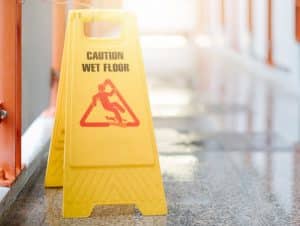
- Missing mats, cones, or warning signs in known wet areas
- Notes of staff comments acknowledging recurring problems
The statute expressly recognizes conditions that “occurred with regularity and were therefore foreseeable” (Florida Statute 768.0755)
Surveillance Video and Preservation
Hotels often record lobbies, hallways, elevators, entrances, and pool decks. Video can show:
- How long the hazard was present
- Whether staff passed by without fixing it
- Whether warning measures were in place
Many systems overwrite footage on a routine schedule. Preservation requests should happen quickly.
For context on why mats and dry walking surfaces are recognized safety controls, OSHA’s walking-working surfaces rule stresses keeping floors clean and, when feasible, dry, and points to mats as an example control (OSHA 29 CFR 1910.22).
Incident Reports and Hotel Records
Your goal is to lock in the basic facts (where/when/who) and identify records (inspections, housekeeping, maintenance) that later show whether the hotel should have found the hazard.
Write down:
- Incident report number
- Names and titles of responding staff
- Security or EMS involvement
- Whether cleanup happened immediately after the fall
Hotels generate inspection, housekeeping, and maintenance records that often become important later.
Injury Documentation
Injury documentation is how you prove the fall caused the harm and how serious it is, especially when symptoms evolve over days.
Injury photographs that help most:
- Photograph bruising, swelling, or abrasions as they appear and change over the next few days.
- Keep the shoes and clothing you were wearing in the same condition (do not clean or discard them).
- Get medical care promptly so the injury, symptoms, and timing are recorded in your medical chart.
Medical records created close in time to the fall often carry more weight than descriptions written much later.
Why Evidence Matters More Than Ever in Florida Slip and Fall Cases
Florida’s summary-judgment practice (Rule 1.510) makes weak cases more likely to end early, so the difference between “maybe” and “provable” often comes down to whether your evidence is preserved and specific.
What that means in real slip and fall cases:
- Judges look closely at the quality of evidence early on
- Claims without solid proof of notice can be dismissed sooner
- Hotels and insurers push hard on “we didn’t know about it” defenses from the start
For injured guests, this shifts the pressure forward. Strong, early evidence is no longer a nice-to-have. It often determines whether a case moves ahead or ends before it truly begins.
Hotel “Hot Zones” Where Slip and Falls Happen Most
Certain hotel areas are common sites of slip-and-fall claims because they combine moisture, foot traffic, and routine operations. Where the fall occurred helps predict which evidence is most material because some hotel areas create recurring, foreseeable hazards that are easier to prove with photographs, video, and maintenance records.
Lobby and Entrance Falls After Rain
Pool-deck falls often focus on whether the wet conditions were foreseeable by design and whether the surface, drainage, and maintenance created an unreasonable slipping risk.
Hotels usually manage this risk with entrance mats, cones, and active floor monitoring. When those measures are missing or poorly maintained, the issue often isn’t surprise—it’s repetition.
Evidence that tends to matter
- No mats or undersized mats at entrances
- Multiple footprints or wheel tracks through the same wet area
- Puddles forming in the same location near doors or thresholds
- Staff comments acknowledging that the area gets slippery when it rains
These cases often hinge on whether the condition occurred frequently enough that the hotel should have anticipated and addressed it.
Pool Decks, Spas, and Hot Tubs
Pool-deck falls often focus on whether the wet conditions were foreseeable by design and whether the surface, drainage, and maintenance created an unreasonable slipping risk.
The Florida Building Code requires pool decks to be sloped to prevent standing water, reinforcing the importance of proper drainage and surface design (Florida Building Code § 454.1.3.1.2).
What to document
- Pooling water near drains or gates
- Algae, sunscreen residue, or slick film
- Worn, smooth, or uneven deck surfaces
- The absence of attendants, mats, or warning signage in high-traffic wet areas
Photos taken soon after a fall can be especially telling in these cases.
Guest Room Bathrooms
Bathroom falls depend on whether the hazard was a one-time wet condition (notice proof) or a room feature/defect (design, maintenance, and prior complaints).
Common issues
- No non-slip mat provided
- Worn or missing anti-slip strips
- Poor drainage that allows water to spread onto the floor
- Slick tile or transitions between surfaces
When the hazard is the surface itself rather than a one-time spill, the claim often shifts toward a static condition analysis. That changes how notice is evaluated and what maintenance or design decisions come into focus.
Buffets, Bars, and Ice Machines
In food-and-beverage areas, the key issue is usually the hotel’s inspection frequency and how quickly staff respond to predictable spills and melting ice.
Key questions
- How often was the area checked?
- Were staff assigned to monitor spills?
- How long could the condition have existed before the fall?
Here, small details—like footprints through a spill or a lack of nearby cleanup supplies—often carry weight.
Stairs and Low-Lighting Areas
Stair falls typically rise or fall on whether a specific condition (lighting, handrail, tread/nosing, visibility of edges) made the stairs unreasonably dangerous and should have been corrected.
Common contributing conditions
- Worn or smooth stair nosings
- Loose or missing handrails
- Poor lighting that makes changes in elevation hard to see
Florida Deadlines and Fault Rules That Change Real Cases
Florida’s deadlines and fault rules affect hotel slip and fall claims long before a case ever reaches a courtroom. They shape how evidence is evaluated and how quickly action is required.
Two-Year Statute of Limitations
Most Florida premises-liability claims are negligence actions. Florida Statute 95.11 provides a two-year limitations period for negligence actions, with the 2023 change applying to actions commenced on/after the effective date of that reform.
While two years may sound generous, waiting often weakens a case. Surveillance footage gets overwritten, employees leave, and inspection and maintenance records cycle out well before the deadline arrives—especially for out-of-state visitors who return home after an injury.
Comparative Fault Rules
Florida follows a modified comparative fault system. If an injured person is found more than 50% responsible for their own fall, recovery is barred under Florida Statute 768.81.
Hotels and insurers raise fault arguments early, often pointing to footwear, distractions, or claims that the condition was obvious. Strong evidence showing the hazard and the hotel’s missed opportunity to address it is key to countering those defenses.
These rules make early investigation critical. Preserving evidence sooner rather than later can shape responsibility, protect your options, and prevent the case from being decided before it really starts.
Who Is Responsible? Hotel Liability Is Often Multi-Party
The right defendant is the entity that controlled the area and controlled maintenance/inspection, which may be different from the brand name on the building. When people say “the hotel,” they usually imagine one company. In reality, several different entities may be involved, including:
- The property owner
- The management company that runs daily operations
- The brand or franchisor on the sign
- Outside vendors, such as housekeeping, maintenance, or pool service companies
Responsibility often comes down to who controlled the area where the fall happened and who was responsible for inspections and upkeep. That’s not always obvious from the guest’s perspective.
Multi-party setups can slow things down early. Different companies may point fingers, and multiple insurers may be involved. Identifying the right responsible parties from the start helps avoid delays and prevents key evidence from falling through the cracks.
Compensation in Florida Hotel Slip and Fall Cases
Compensation in a Florida hotel slip and fall cases usually depends on (1) provable medical and financial losses and (2) whether the evidence supports liability—especially proof of notice in temporary-substance cases.
Types of Compensation That May Be Available
Depending on the facts, compensation can include:
- Medical expenses, such as emergency care, hospital treatment, therapy, medication, and follow-up visits
- Lost income, including missed work and, in some cases, reduced earning ability
- Pain and suffering, covering physical pain, limitations, and loss of enjoyment of daily activities
- Future care needs, when ongoing treatment or rehabilitation is required
Florida law allows recovery for both economic and non-economic damages when negligence is established.
What Influences the Value of Compensation
In hotel slip and fall cases, compensation is not based on injury alone. Insurers evaluate medical records and financial losses, as well as the clarity of the evidence supporting a finding that the hotel is responsible under Florida law.
Florida courts have made clear that a fall by itself does not establish liability. Appellate decisions such as Duran v. Crab Shack Acquisition, FL, LLC reinforce that claims involving temporary hazards require evidence showing how long the condition existed or that it occurred regularly. In practice, the presence or absence of that proof often shapes how compensation is evaluated.
How Fault Can Affect Compensation
Florida applies a modified comparative fault rule. If an injured person is found more than 50% responsible, recovery is barred. If fault is 50% or less, compensation may be reduced by that percentage.
Because fault findings directly affect the amount recoverable, clear documentation of the hazard and how the fall occurred can play a meaningful role in protecting the value of a claim.
What to Do After a Slip and Fall at a Florida Hotel
Hotel slip and fall cases in Florida are decided by evidence and timing, not assumptions. If you do nothing else, preserve the proof that shows notice (photos/video/witnesses/records) before it is overwritten or cleaned up. What gets documented in the first days after a fall—photos, video, reports, witness names—often matters more than what happens months later.
Hotels move quickly. Surveillance footage gets overwritten. Staff members rotate. Maintenance records cycle out. Once those pieces are gone, they’re usually gone for good.
If you were injured at a Florida hotel, getting legal guidance early can help protect the evidence that gives a claim real footing. We offer free consultations, and there are no fees unless we recover.
When you reach out, you’ll speak directly with a lawyer about your situation—not a call center—so you can understand where you stand and what makes sense next.