

Hotel bathroom falls aren’t random accidents. Wet floors are a known, repeat condition created by showers and tubs, and hotels are expected to plan for that reality. When design, drainage, mats, or basic safety controls fall short, a routine shower can turn into a serious injury in seconds.
A hotel bathroom can look spotless and still be a fall trap. If you slipped in the shower, stepped out of a tub, or went down on wet tile, the details you capture right away can shape what happens next.
Take These Steps Right After a Hotel Bathroom Fall
- Get medical care. Head impact, dizziness, neck/back pain, or a hard landing on a wrist or hip deserves a prompt check.
- Report the fall to the hotel and ask for an incident report. Get the manager’s name, the report number, and the time recorded.
- Photograph and record a video of the bathroom before anything changes. Bathrooms dry fast, and staff can clean or move items. Capture any warning sign you see, plus the absence of one.
- Save your shoes and clothing. Bag them. Don’t wash them yet.
- Get names and contact info. Witnesses, responding staff, and anyone who helped you up.
- Write a quick timeline. Room number, time, what you were doing, where you stepped, and what the floor felt like.
- Skip recorded statements while you’re rattled. It’s fine to say you’ll follow up later.
Bathroom falls are not rare. The CDC has reported a large national estimate of emergency department visits for bathroom injuries, with falls as the primary driver, as detailed in its report on nonfatal bathroom injuries in the United States.
Why Hotel Bathrooms Cause So Many Serious Slip and Fall Injuries
Hotel bathrooms combine water, smooth finishes, and tight spaces where a single misstep can send you tumbling.
- Bathrooms get wet during normal use. The shower or tub gets wet every time someone bathes.
- Wet surfaces cut traction. Soap or shampoo residue can make the floor slick.
- Travel factors stack risk. Fatigue, unfamiliar layouts, rushing, and low lighting increase the odds against you.
- The step out of a tub or shower is a common trigger. Balance shifts, then your first foot lands on wet tile.
CDC fall-prevention materials note that falls often result from multiple interacting risk factors, not from a single cause, as explained in the CDC’s fall risk factors fact sheet. The CDC’s bathroom-injury report supports the broader point that bathroom injuries are common and fall-driven.
Hotel Bathrooms Create Predictable, Repeat Wet Hazards
A wet floor in a hallway might be a one-time problem. In a bathroom, wet floors are part of normal use. Water shows up, spreads, and often doesn’t clear right away.
Where water starts: shower spray, drips from towels or bodies, leaks, and steam condensing on tile.
How it spreads: short curtains, door gaps, tight layouts, and towels tossed on the floor.
Why it stays: slow drains, low spots, poor slope.
Where falls happen: first step out, turning for a towel, stepping onto tile with wet feet.
That pattern matters because repeat wetness is predictable—and predictability leaves evidence. Pooling that returns, residue where people stand, and the same slick step-out zone appearing in room after room are not accidents. They are conditions.
In safety rules for wet work areas, OSHA highlights two basic controls: keep drainage working and provide dry standing places, such as mats when feasible, as reflected in OSHA’s walking-working surfaces standard. That same logic applies to shower and tub areas.
The 5 Bathroom Problems That Show Up in Hotel Shower and Tub Falls
Is a hotel automatically at fault if I slip near a pool?
No. In most cases, you must show the hotel had actual or constructive knowledge of the dangerous condition and failed to act, as required by Florida’s transitory foreign substance statute.
1. Slick surfaces (tile, stone, tub floors)
Some hotel floors lose grip fast once wet, especially glossy tile or smooth tub bases. In many rooms, the most slippery spot is the tile just outside the shower, where water lands every time.
- What you might notice: shiny finishes, worn patches, or a “fast” feeling underfoot when wet.
- Why it matters: traction varies by material and condition, and surface choices are operational decisions made by the hotel.
The flooring industry uses established test methods to measure slip resistance on hard surfaces, often discussed in terms of dynamic coefficient of friction testing. Those tests exist because traction can be evaluated and compared, and choosing flooring that becomes dangerously slick when wet is a known, preventable risk.
2. Soap, shampoo, and cleaning film
A bathroom can look clean and still have a slick layer. If you slipped near the tub edge or shower threshold, any residue should be documented with close-up photos. Soap scum and product residue build up where people stand and step out. Some cleaning products can also leave a film if rinsing is incomplete.
What you might notice: a sheen, slippery strips near the tub edge, or slickness that worsens when wet.
3. No bath mat, or a mat that slides
A mat helps only if it sits where water lands and stays put. If the mat was missing, note whether one appeared after your report.
- What you might notice: no mat, a tiny mat, a mat with no grip backing, or a mat that bunches or slides.
- Why it matters: a sliding mat can become its own hazard.
OSHA’s wet-area safety language identifies mats as one way to provide a dry standing area when wet conditions are part of the environment, as outlined in OSHA’s wet-surface safety guidance.
4. No grab bars where people need them most
Grab bars provide a stable handhold when footing goes bad. Towel racks are not designed for that load. If you grabbed one and it moved, photograph it. What you might notice: no grab bar near a step-over tub or shower entry, or bars only in certain rooms.
The ADA’s 2010 Standards for Accessible Design set minimum accessibility requirements for covered facilities, and the Access Board’s bathing room guidance explains how those requirements apply where accessible bathing rooms are provided. That guidance reflects a broader safety principle: when footing becomes unstable during tub or shower entry, a fixed handhold is an expected safeguard.
5. Drainage, pooling, leaks, and overspray
If the floor remains wet after a normal shower, the risk recurs. Slow drains, poor slope, or leaks can keep the same area wet for the next guest.
What you might notice: puddles near the drain, water sitting along the tub edge, damp spots that linger, drips from fixtures, or water outside the shower footprint.
OSHA’s wet-process rule highlights drainage as a core control for wet conditions. The NFSI restroom safety checklist reflects the same practical approach: inspect regularly, address traction issues, and focus on high-risk wet areas. That guidance exists because standing water after normal use is not incidental—it signals a condition that should be identified and corrected.
What to Photograph and Save (This Makes a Huge Difference)
Photos freeze the scene before staff clean, replace a mat, or fix a leak. If you can do it safely, record a 10–15-second video showing the walking path from the shower to the towel spot and the exit.
Photos to take
- Wide shots: the full bathroom from the doorway and from inside.
- The slip area: close-up plus a wider view showing its location.
- Water and drainage: drain position, pooling, and low spots.
- Mats: presence, placement, and underside backing.
- Grab bars: installed bars or bare walls.
- Curtain or door setup: gaps, curtain length, and where water lands.
- Lighting: brightness and any bulb that is out.
Things to keep
Shoes or sandals, clothing, medical paperwork, daily bruise photos, and your written timeline. If the hotel changes the room setup afterward, write down when that happened and who did it.
The CDC’s bathroom injury data underscores the importance of timely documentation, as shown in its analysis of nonfatal bathroom injuries. The NFSI checklist approach also supports focusing on traction, wetness, and inspection—exactly the kinds of hazards trained inspectors look for.
How Hotels Are Evaluated When Bathroom Floors Keep Getting Wet
A single spill can be random. A bathroom gets wet again and again. The real question becomes what controls the hotel puts in place for predictable, repeat wetness.
These controls—flooring selection, drainage performance, mat placement, and handholds—are operational choices made by the hotel, not moment-to-moment decisions by the guest.
Repeat-condition signs include:
- pooling near the drain or tub edge
- a leak that feeds the same wet patch
- a slick step-out zone with no mat
- worn flooring that has lost traction
- a layout that forces guests onto wet tile without a handhold
In wet environments, OSHA identifies drainage and dry standing areas, such as mats, as standard controls when feasible. The NFSI restroom checklist echoes the same idea from an inspection perspective.
Florida Law: What Matters in a Hotel Bathroom Slip and Fall Claim
Florida has a specific rule that often applies to slip and fall incidents in hotel bathrooms. In plain terms, the question is whether the hotel knew about the dangerous condition—or should have known about it—and failed to fix it or warn guests. That standard comes from Florida Statute §768.0755.
In real life, “should have known” usually shows up through common-sense clues, such as:
- Water that looks like it was already there when you walked in
- Pooling tied to slow drainage or a bad slope
- Residue or slick areas that build up over time
- Missing mats where people naturally step out of the shower
- A leak that keeps feeding the same wet spot
- The same wet pattern appears again and again in the same place
Common Questions After a Hotel Bathroom Slip
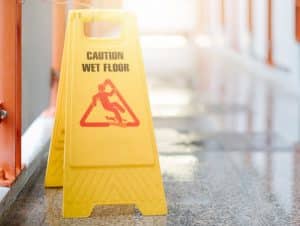
What if there was a “Wet Floor” sign in a public bathroom?
A sign is a warning, not a fix. In a bathroom, wetness is predictable. The issue is whether the hotel used reasonable controls for a wet environment, such as working drainage and mats that stay put.
What if the bathroom dried before I took photos?
Take photos anyway. Focus on the drain, slope, shower setup, mat placement, and lighting. Write down what you saw immediately after the fall.
What if I was wearing flip-flops?
Footwear can come up, but people wear sandals in hotel bathrooms every day. Save the footwear and photograph the soles. The bathroom conditions still matter.
What if I didn’t report it right away?
Report it as soon as you can. Then document the timeline and who you spoke with. Conditions can change quickly once a room is cleaned.
What if I’m visiting Florida from another state?
That’s common. Keep copies of medical records and maintain a clean timeline separating what happened in Florida from any follow-up care at home.
What injuries are common in shower and tub falls?
Shower and tub falls can cause fractures, head injuries, and neck or back injuries. The CDC’s report on bathroom injuries shows falls drive most of these events and that injury rates rise with age. CDC fall-risk materials also emphasize that risk increases when multiple factors stack.
When It’s Worth Talking to a Lawyer About a Hotel Bathroom Fall
Hotel bathroom falls are rarely about a single misstep. They usually come down to whether the hotel accounted for predictable wet conditions in a space designed to be wet, and whether the evidence shows those conditions were allowed to recur.
A legal review is often worth considering when a bathroom fall leads to real consequences, such as:
- The need for imaging, stitches, or ongoing medical treatment
- A head impact, dizziness, or neck or back symptoms
- Missed work, travel disruption, or limits on normal activities
- A hotel that disputes how the fall happened or quickly pushes for a recorded statement
- Signs of a repeat condition, such as pooling water, poor drainage, missing mats, slick surfaces, or the same wet area appearing again and again
At that point, timing matters. Bathroom conditions change fast once a room is cleaned, repaired, or put back into service. Having photos, video, the incident report details, medical visit dates, and a short written timeline in one place helps keep the focus on what the bathroom was doing—not on assumptions about the guest.
Stabinski Law offers free consultations and no fees unless there’s a recovery. You speak directly with an attorney who handles hotel slip and fall cases, not a call center, and the review starts with the evidence and the conditions that caused the fall.