

Proving liability in a Florida slip and fall case starts with evidence. A fall on someone else’s property does not automatically make the property owner or business responsible. The claim usually depends on whether a dangerous condition existed, whether the responsible party knew or should have known about it, whether they failed to fix it or warn visitors, and whether that condition caused your injury.
For many people, the hardest part is understanding the “knew or should have known” standard. That question comes up often in Florida slip and fall cases involving grocery stores, restaurants, hotels, apartment buildings, condo properties, parking garages, shopping centers, office buildings, and other places people visit in Miami.
How Slip and Fall Liability Works in Florida
To prove liability in a slip and fall case in Florida, an injured person usually needs evidence of four main points:
- A dangerous condition existed.
- The property owner, business, manager, tenant, maintenance company, or another responsible party knew or should have known about it.
- The responsible party failed to fix the condition or warn visitors.
- The dangerous condition caused injuries and damages.
Florida’s civil jury instructions include premises liability instructions under the general negligence section, including instruction 401.20, “Issues on Plaintiff’s Claim: Premises Liability.” The same set of civil instructions also includes instructions on legal cause, burden of proof, defense issues, and damages.
That matters because a slip and fall claim is usually built around proof, not assumptions. A person may have a serious injury after falling in a store, but the case still needs evidence connecting the injury to a dangerous condition and connecting that condition to something the responsible party did or failed to do.
What Counts as a Dangerous Condition?
A dangerous condition is a property hazard that creates an unreasonable risk of harm. Some hazards appear suddenly. Others build up over time because of poor inspection, cleaning, repair, or maintenance.
Common slip and fall hazards in Florida include:
- Rainwater tracked into a store, hotel, restaurant, or office lobby
- Spills near drink machines, self-checkout areas, buffet lines, or coolers
- Recurring leaks from refrigerators, ice machines, air conditioning units, or plumbing
- Wet bathroom floors
- Loose mats or curled rugs
- Broken stairs
- Missing or loose handrails
- Uneven flooring
- Poor lighting
- Cracked pavement
- Algae or slippery buildup on outdoor walkways
- Debris in aisles, hallways, parking lots, or common areas
The type of hazard affects the proof needed. A puddle of water near a grocery store entrance may require evidence of how long the water had been there or whether the store knew rainwater was regularly tracked inside. A broken stair in a condo building may involve repair records, prior complaints, inspection history, or photographs showing the condition existed before the fall.
Actual Notice vs. Constructive Notice in Florida Slip and Fall Cases
Notice is one of the most important parts of proving liability. In plain language, notice means the responsible party knew or should have known about the dangerous condition before the fall.
Actual Notice: When the Business Knew About the Danger
Actual notice means the business or property owner knew the dangerous condition existed.
Examples may include:
- An employee saw water on the floor and walked away.
- A customer told staff about a spill before the fall.
- A manager knew a refrigerator was leaking.
- Staff created the hazard by mopping without placing warning signs.
- A maintenance worker knew a walkway became slick after rain.
- A tenant or resident had already reported a broken step or loose handrail.
Actual notice can sometimes be proven through witness statements, employee admissions, incident reports, maintenance requests, text messages, emails, work orders, or surveillance footage.
Constructive Notice: When the Business Should Have Known
Constructive notice means the responsible party may not have admitted knowing about the hazard, but the facts suggest they should have discovered it through reasonable care.
Florida statute says the injured person must prove that the business had actual or constructive knowledge of the dangerous condition and should have taken action. It also says constructive knowledge may be shown by circumstantial evidence that the condition existed long enough that the business should have known about it, or that the condition occurred regularly and was therefore foreseeable.
Constructive notice often comes from small details:
- Dirty water, footprints, or shopping cart tracks through a spill
- A puddle near a drink machine where spills happen often
- A leaking cooler that had leaked before
- Rainwater that regularly collects near an entrance
- Algae on an outdoor walkway that developed over time
- A bathroom floor that had not been inspected for a long period
- Cleaning logs showing a gap in inspections
- Prior complaints about the same hazard
Florida’s Rule for Spills and Other Transitory Foreign Substances
Many Florida slip and fall cases involve something temporary on the floor. The legal term is “transitory foreign substance.” In everyday language, that usually means something that should not be on the floor and may cause someone to slip.
Examples include:
- Water
- Soda
- Oil
- Soap
- Food
- Melted ice
- Rainwater
- Cleaning solution
- Grease
- Liquid near a cooler, freezer, or drink station
Florida law places a specific burden on injured people in these cases. If someone slips and falls on a transitory foreign substance in a business, they must prove the business had actual or constructive knowledge of the dangerous condition and should have acted.
That is why the timeline matters. A store may argue that another customer dropped a drink moments before the fall and employees had no fair chance to find it. The injured person may point to evidence that the liquid was dirty, tracked through, near a recurring leak, in an area where spills happen often, or present long enough that reasonable inspections should have found it.
The proof changes from case to case. A fall near a self-serve drink station may involve inspection schedules and prior spill history. A fall near a store entrance during a rainstorm may involve mats, warning signs, floor drying practices, and whether employees knew water regularly collected there. A fall on an outdoor walkway covered in algae may involve maintenance practices, photos, weather exposure, and how long the buildup existed.
Evidence That Can Help Prove Liability
Strong slip and fall claims are built with details. The evidence should help answer what happened, why it happened, who was responsible for the area, and whether the danger should have been fixed before anyone got hurt.
Photos and Videos From the Scene
Photos and videos can show the condition before it is cleaned, repaired, moved, or covered up.
Useful photos may show:
- The liquid, debris, broken surface, algae, mat, stair, or hazard
- The exact place where the fall happened
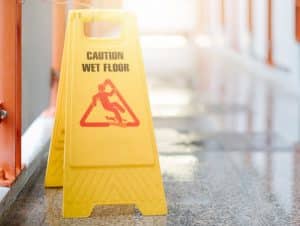
- Warning signs or the lack of warning signs
- Lighting conditions
- The surrounding floor
- Footprints, cart tracks, dirt, or streak marks
- Nearby cameras
- The entrance, aisle, walkway, stairwell, parking area, or lobby
- The shoes and clothing worn at the time
Take wide shots and close-ups when possible. A close-up may show the spill. A wide shot may show that no warning sign was nearby or that the hazard was in a path customers had to use.
Surveillance Footage
Surveillance footage can be powerful because it may show what happened before the fall. Video may show when the hazard appeared, how many people walked by, whether staff passed the area, whether warning signs were placed, and how the fall occurred.
Video may also show inspection gaps. If no employee checked an entrance, aisle, bathroom, lobby, or walkway for a long period, that may matter.
The concern is preservation. Many businesses overwrite or erase footage on a set schedule. Early action can help protect video before it disappears.
Incident Reports
An incident report can help document the basic facts. It may include the date, time, location, names of employees or managers, witness information, and a description of the hazard.
Ask for a report when you can. Keep your description factual. Do not guess about what caused the fall if you are unsure. Do not minimize pain because you feel embarrassed or want to leave. Many injuries feel worse later, especially back, neck, knee, shoulder, hip, and head injuries.
Witness Statements
Witnesses can fill in details that a photo cannot.
Helpful witnesses may include:
- Customers
- Employees
- Managers
- Security guards
- Maintenance workers
- Residents or tenants
- Family members
- Hotel guests
- Bystanders who helped after the fall
A witness may have seen the spill before the fall, heard someone report it, noticed employees walk past it, or watched the injured person fall. Get names and contact information when possible. A witness who is easy to find on the day of the fall may be difficult to locate weeks later.
Cleaning, Inspection, and Maintenance Records
Cleaning and maintenance records often matter when the issue is noticed. These records may show whether the property was inspected, whether problems were reported, and whether repairs were delayed.
Depending on the location, useful records may include:
- Sweep logs
- Bathroom inspection sheets
- Cleaning schedules
- Maintenance reports
- Repair requests
- Work orders
- Prior complaints
- Condo or apartment maintenance records
- Property management records
- Employee assignment logs
- Security reports
For example, if someone slips near a drink machine, inspection logs may show when that area was last checked.
Medical Records
Medical records connect the fall to the injury. They also help show the extent of the harm.
Important records may include:
- Emergency room records
- Urgent care records
- Imaging results
- Orthopedic evaluations
- Neurology evaluations
- Physical therapy notes
- Pain management records
- Surgery records
- Work restrictions
- Prescription records
- Follow-up appointments
A delay in treatment does not always end a case, but insurance companies often use treatment gaps to challenge injuries. Getting care and following medical advice helps protect both your health and your claim.
What to Do After a Slip and Fall in Miami
A slip and fall can be disorienting. People often feel embarrassed, angry, shaken, or in pain. A few careful steps can help protect the facts.
Before Leaving the Scene
If you can, report the fall to a manager, property owner, security guard, or another responsible party. Ask for an incident report. Take photos and videos of the hazard and surrounding area. Get witness names and contact information. Save the shoes and clothing you were wearing.
Look for nearby cameras. In Miami, falls often happen in places with security footage, including hotels, grocery stores, parking garages, apartment buildings, condo lobbies, restaurants, office buildings, malls, and medical facilities.
Avoid giving a recorded statement to an insurance company before you understand what is being asked. A simple answer given while you are in pain or confused can be used later.
In the First 24 Hours
Seek medical care. Write down what happened while the details are fresh. Save discharge papers, receipts, photos, insurance letters, and any messages from the property owner or business.
Be as specific as possible about location. “I fell at the store” is less helpful than “I fell near the self-serve drink machine by the front registers” or “I fell on the wet tile just inside the hotel entrance.”
Those details help identify cameras, witnesses, inspection records, and the people responsible for that area.
If You Did Not Collect Evidence Right Away
Many people leave without taking photos or getting witness names. That does not mean the case is automatically over.
An attorney may still be able to request surveillance footage, incident reports, maintenance records, cleaning logs, employee information, prior complaints, and insurance details. Medical records may still help connect the injury to the fall. Witnesses may still be found.
The sooner the claim is reviewed, the better the chance of finding evidence before it is lost, erased, repaired, or forgotten.
Florida Comparative Fault and Slip and Fall Claims
Florida uses a modified comparative fault system in many negligence cases. If an injured person shares fault, the amount awarded may be reduced by that percentage. Florida law also says that a party found greater than 50% at fault for their own harm may not recover damages in negligence actions covered by that subsection, with an exception for medical negligence actions.
This is why the details matter. Photos, video, witness statements, warning signs, inspection records, and medical records may all affect how fault is evaluated.
How Long You Have to File a Slip and Fall Lawsuit in Florida
Deadlines can depend on the facts, the parties involved, and the type of claim. Claims involving government entities or unusual circumstances may involve additional requirements.
Waiting can also make the evidence harder to find. Video may be erased. The floor may be repaired. Algae may be pressure washed. Witnesses may move on. Cleaning logs may be harder to obtain. A dangerous condition that was obvious on the day of the fall may look completely different a week later.
How a Miami Slip and Fall Attorney Can Help Prove Liability
A slip and fall case needs a careful look at the facts. That review usually starts with practical questions:
- Where did the fall happen?
- What caused it?
- Who controlled the property?
- Who was responsible for inspecting, cleaning, or maintaining the area?
- Were there cameras?
- Were there witnesses?
- Was an incident report created?
- Did the same problem happen before?
- What injuries followed?
A Miami slip and fall attorney may help identify responsible parties, request surveillance footage, preserve incident reports, review cleaning and inspection logs, look for prior complaints, gather medical records, document lost income, evaluate comparative fault arguments, and communicate with insurance companies.
Liability may involve a property owner, business operator, commercial tenant, property manager, maintenance company, condo association, apartment complex, hotel, restaurant, homeowner, security company, or government entity. The right answer depends on control, responsibility, and evidence.
What Happens After You Contact Stabinski Law
When you contact Stabinski Law after a slip and fall in Miami or elsewhere in Florida, our team will ask focused questions about what happened, where the fall occurred, what caused it, who saw it, what injuries you suffered, and whether you have photos, reports, insurance documents, or medical records.
Stabinski Law is not a high-volume case factory. Clients come to us because they want their questions answered, their concerns heard, and their case reviewed with care. We help injury victims and families understand the process, communicate with insurance companies, and build claims with preparation and attention to detail.
Free consultations are available. If we accept your case on a contingency-fee basis, you do not pay attorney’s fees upfront. The fee is paid from the recovery, subject to the fee agreement.
Hablamos español. Spanish-speaking clients and family members can ask questions, discuss documents, and understand the legal process in Spanish.
To talk about what happened, contact Stabinski Law for a free case review.