

To succeed in a Florida business slip and fall claim, you must demonstrate that a dangerous condition caused your fall. Furthermore, in many cases, you must also prove that the business owner had either actual or constructive notice of the hazard and was negligent in failing to address it.. That is why these cases often turn on both liability and proof: what caused the fall, how long the danger persisted, whether it was a recurring problem, and what evidence remains.
Here is what to know right away:
- You may have a claim if a dangerous condition caused your fall and the person or business in charge failed to act reasonably.
- In many Florida business cases, notice matters. That can mean proof that the hazard was there long enough to be discovered or happened often enough to be foreseeable.
- The best evidence is usually gathered early: photos, video, witness names, incident reports, medical records, and requests to preserve surveillance footage.
- Waiting can hurt your case long before the legal deadline does.
Florida negligence claims generally have a two-year deadline, but the practical deadline is often sooner because evidence does not last. And do not brush off an injury just because you got up afterward. According to the CDC’s older adult falls data, about 37% of falls reported by adults 65 and older cause an injury serious enough to require medical treatment or limit activity.
Curious if you have a case? Talk to one of our slip and fall attorneys in Miami today.
Do You Actually Have a Slip and Fall Case?
A real slip and fall claim is usually built on four basic ideas:
- there was a dangerous condition,
- someone responsible for the property had a duty to keep the area reasonably safe or warn people,
- that failure caused the fall, and
- the fall caused actual harm.
Not every fall becomes a claim. But not every strong case looks obvious in the first five minutes either.
A lot of people talk themselves out of a claim too early. They say it was “just rainwater.” Or they assume they do not have a case because no bone was broken that day. Or they think the property owner is automatically off the hook because a cone was nearby. Real cases are usually more fact-specific than that.
- Where exactly did the fall happen?
- How long had the condition been there?
- Was this a recurring problem?
- Was the area poorly designed, poorly maintained, or badly monitored? Was there video?
These questions matter. Especially in South Florida, hazards show up over and over again: wet tile at entrances after sudden rain, slick pool decks, moisture on exterior walkways, worn stair edges, bad lighting in garages, uneven pavement, and condo or hotel common areas where multiple parties may have some role in maintenance and control.
Why South Florida Slip and Fall Cases Are Different
Miami, Fort Lauderdale, West Palm Beach, and all of South Florida present unique hazards to residents and visitors alike.
The weather is part of the story. The National Weather Service office in Miami identifies a long summer wet season of about 152 days, accounting for roughly 69% of Miami’s annual rainfall. In that period, heavy daily rainfall patterns are part of life. That does not mean every wet floor creates liability. It does mean stores, hotels, restaurants, condos, and other properties in South Florida should anticipate water tracking indoors, exterior surfaces staying wet, and busy walking areas becoming dangerous quickly.
The built environment matters too. This region has a heavy mix of condos, hotels, tourism traffic, valet areas, pools, garage structures, and outdoor walkways. Those places are constantly being cleaned, used, and reused. Conditions change quickly, staff rotate, and vendors come and go. A dangerous condition can form fast, and the evidence can disappear just as fast.
Slip and fall cases in South Florida are often less about dramatic legal theory and more about fast, disciplined evidence work:
- What did the floor look like before cleanup?
- Were there footprints in the liquid?
- Were mats missing?
- Was the lighting bad?
- Had residents or customers complained before?
- Did the property have a recurring leak, drainage problem, or slippery transition area?
What Counts As a Slip, Trip, or Fall Claim?
If a dangerous condition on someone else’s property caused your fall, you may have a claim.
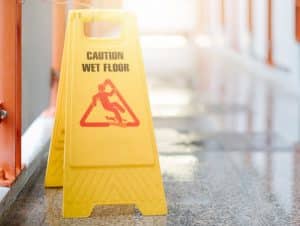
That can be a classic slip on water, food, soap, or another temporary slick substance. In Florida business cases, there is a specific statute for such situations, and it usually comes down to whether the business had actual or constructive notice of the hazard and failed to address it.
But not every case is a wet-floor case. A valid claim can also involve unsafe walking conditions, such as:
- uneven pavement
- broken or poorly marked steps
- loose mats
- worn or slick flooring
- sudden changes in elevation
- poor lighting
- damaged handrails
- unsafe exterior walkways
- slippery pool or recreation areas
That does not mean every fall leads to a lawsuit. The issue is whether the property was reasonably safe under the circumstances.
Safety standards help show what that looks like in the real world. OSHA says walking-working surfaces should be kept clean, inspected, and, when feasible, kept dry and free of hazards such as leaks and spills. The U.S. Access Board’s ADA guidance also addresses surface characteristics, changes in level, and safe walking routes.
To put it plainly, you may have a case when the property was not reasonably safe, that unsafe condition caused the fall, and there is enough evidence to prove it.
How Liability Works in Florida
A slip and fall case is not about proving a property owner was perfect. It is about proving they were not reasonably careful.
In many Florida business cases, the key issue is notice. Under Florida law, the injured person usually has to show the business had actual or constructive knowledge of the condition and failed to fix it or warn people in time.
Here is what that means in real life:
- Actual knowledge means someone knew about the hazard. Maybe an employee saw it, caused it, or was told about it.
- Constructive knowledge means the business should have known. Maybe the hazard was there long enough to be discovered, or it happened often enough to be predictable.
That is why evidence matters so much in these cases.
A puddle with footprints or cart tracks through it may suggest it had been there for a while. A recurring leak near an entrance, cooler, or drink station may show that the problem was foreseeable. Missing mats, weak inspection routines, poor lighting, algae on a walkway, drainage issues, or badly maintained stairs can all help tell the story of what the property owner knew or should have known.
Florida’s comparative fault rule matters too. If a person is found more than 50% at fault for their own injuries, they may be barred from recovering damages. If they are 50% or less at fault, their compensation can still be reduced.
That is why insurance companies often move quickly to blame the injured person. They may say the hazard was obvious, you were distracted, or your shoes were the problem.
Liability usually comes down to three questions: (1) what made the property unsafe, (2) how long that danger was there, and (3) what proof exists to show the owner or business should have done something about it.
Common South Florida Hazards Behind Slip and Fall Claims
Most South Florida slip and fall cases are not random accidents. They happen in places where hazards are predictable, conditions change fast, and the people in charge are supposed to stay on top of them.
Rainwater at Entrances
In South Florida, sudden rain can be a near-daily occurrence. Rainy entryways are not automatically excused just because the weather changed. The real question is whether the property responded reasonably to a predictable wet condition. Were mats in place? Was the floor unusually slick? Was the area being watched? Were warnings visible? Did anyone ignore an obvious hazard?
Pool Decks and Recreation Areas
Pool decks, spas, locker areas, and other recreation spaces are common problem areas in South Florida. Water builds up. Surfaces wear down. Algae can form. Drainage can fail. In these cases, prior complaints, cleaning practices, lighting, surface condition, and maintenance history can all matter.
Condo and Apartment Common Areas
South Florida is full of condos and apartment buildings, which means many falls occur in shared spaces like lobbies, stairwells, sidewalks, garages, elevators, mailrooms, and amenity areas. One of the first questions is who controlled the area: the association, the landlord, the management company, a maintenance vendor, or someone else.
Hotels, Restaurants, and Retail Properties
These properties move fast. Heavy foot traffic, frequent cleaning, and constant turnover mean hazards can appear and disappear quickly. They also tend to generate the kind of evidence that matters most, like surveillance footage, inspection logs, employee witnesses, and incident reports.
Garages, Stairwells, and Exterior Walkways
These cases are often about more than a spill. Poor lighting, worn striping, missing handrails, abrupt elevation changes, damaged concrete, and slick outdoor surfaces can all contribute. In spaces like these, safe walking conditions depend on regular inspection, maintenance, and attention to hazards before someone gets hurt.
What Evidence Helps a South Florida Slip and Fall Case?
The strongest slip and fall cases are usually built on simple, early evidence. The evidence that matters most for your case is usually practical: a photo taken before the floor was cleaned, a witness who saw the hazard before the fall, an incident report made that day, surveillance footage preserved before it was erased, and medical records that tie the injury to the fall from the start.
The most useful evidence often includes:
- Photos or video of the hazard and surrounding area
- The exact location of the fall
- Warning signs, or the lack of them
- Lighting conditions
- Shoes and clothing worn at the time
- Witness names and contact information
- The incident report
- Surveillance footage
- Cleaning, inspection, and maintenance logs
- Prior complaints
- Medical records showing when symptoms began and how treatment progressed
This is also why waiting can hurt a case. The longer you wait, the harder it becomes to show what the property looked like, how long the hazard was there, and whether it was part of a known recurring problem.
In South Florida, that problem gets worse fast. Busy properties turn over quickly. Spills get cleaned up. Floors dry. Cones get moved. Video gets overwritten. Witnesses disappear.
What to Do Right After a Slip and Fall
What you do in the first few hours can affect both your health and your case.
Start with medical care. Get checked out as soon as you can. Some injuries do not fully show up at the scene, especially head injuries, back injuries, and certain fractures. That is one reason falls can be serious, particularly for older adults. According to the CDC, falls are the leading cause of injury for adults 65 and older.
Then focus on preserving the facts. Report the fall to the manager, property owner, landlord, front desk, or whoever is in charge of the property. Stick to what happened. Do not guess. Do not fill in gaps. Ask whether an incident report is being made.
If you can do it safely, take photos or video before the scene changes. Get the hazard, the area around it, your shoes, any visible injuries, and whether warning signs or mats were missing.
If anyone saw the fall or saw the hazard before it happened, get their name and contact information.
Keep the shoes and clothing you were wearing. Do not wash them, throw them out, or bury them in a closet. Save receipts, discharge papers, prescriptions, and follow-up instructions too.
And be careful with early insurance calls. A recorded statement given too soon can lock you into an incomplete version of events before the medical picture or property evidence is clear.
Common Injuries After a South Florida Fall
Slip and fall injuries are easy to minimize at first and harder to ignore once treatment starts.
A fall can lead to broken wrists, ankles, or hips, along with knee injuries, shoulder injuries, herniated discs, spinal injuries, head injuries, and concussions. Some people recover with rest and time. Others end up needing imaging, rehab, surgery, pain treatment, or time away from work.
Older adults face especially serious risks. According to the CDC’s older adult falls data, more than 14 million adults 65 and older report falling each year, and about 37% of those falls cause an injury serious enough to require medical treatment or limit activity for at least a day.
The takeaway is simple: Don’t downplay the injury too early. “I thought I was okay” is something people say all the time after a fall, especially before the pain, stiffness, or neurological symptoms fully show up.
How Long Do You Have To File a Slip and Fall Lawsuit in Florida?
For negligence actions in Florida, the general limitations period is two years under section 95.11(5)(a). That means old online content still talking about a four-year deadline can be flat wrong for many current injury claims.
But the practical deadline is often much sooner. As time passes, the evidence usually gets worse, not better. Surveillance footage may be overwritten, the area may be cleaned or repaired, weather can change the scene, and the people who saw what happened often remember less or become harder to reach. Even an incident report that seemed routine at the time can later become a key piece of evidence.
So yes, the legal filing deadline matters. But in many slip and fall cases, the evidence deadline matters first.
Can You Still Recover If You Were Partly at Fault?
You still may be able to recover compensation even if you were partly at fault for the fall.
Under Florida’s comparative fault rule, someone found more than 50% at fault in a covered negligence case may be barred from recovering damages. If they are 50% or less at fault, their compensation can still be reduced by their share of fault.
That is why these cases should not be reduced to “you should have watched where you were going.” Real life is more complicated than that. People walk into stores, hotels, condos, and other properties expecting reasonably safe floors, stairs, walkways, and common areas. The law looks at both sides: the condition of the property and the injured person’s conduct.
What Damages Can You Recover After a Florida Slip and Fall?
A slip and fall claim in Florida may allow you to recover compensation for medical bills, lost wages, future care, pain and suffering, and the ways the injury affects your daily life.
Compensation depends on two things: (1) how serious the injury is and (2) how well the case can be proven. A serious injury with weak evidence is not the same as a moderate injury backed by strong proof that the property owner knew, or should have known, about the hazard and failed to fix it or warn people.
In other words, case value is not just about the injury. It is about the injury plus the evidence. That is why this page focuses so heavily on proof. In slip and fall cases, the strength of the evidence often shapes the value of the claim.
Frequently Asked Questions About Florida Slip and Fall Cases
Can you still have a case if you slipped on rainwater?
Yes, you may still have a case if the property failed to respond reasonably to a predictable wet condition, such as tracked-in rainwater at an entrance or a known slippery transition area. Rain by itself is not negligence. The real question is whether the property handled that condition the way a reasonably careful business or owner should have.
Does a warning sign automatically defeat a slip and fall claim?
No, a warning sign does not automatically defeat a claim if it was poorly placed, hard to see, too late, or did not reasonably address the actual hazard. The issue is not just whether a sign existed. It is whether the warning was enough under the circumstances.
Can you sue if you fell at a condo, hotel, or apartment complex?
Yes, you may still have a claim if a dangerous condition in a condo, hotel, or apartment complex caused your fall. The next question is usually who controlled, maintained, or was responsible for the area where the fall happened.
Can you still prove a slip and fall case without video?
Yes, a slip and fall case can still be proven without video using photos, witness statements, incident reports, maintenance records, prior complaints, and medical documentation. Video helps, but it is not the only kind of evidence that matters.
Can you still recover if you did not go to the doctor right away?
Yes, delaying treatment does not automatically destroy a claim, but it can make both the medical and legal sides harder to prove. That is why it is usually better to get checked out sooner, even if the injury seems minor at first.
Why South Florida Slip and Fall Clients Choose Stabinski Law
Slip and fall cases are everywhere. Careful, trial-ready case building is not.
Stabinski Law has represented injured Florida residents and visitors since 1970, and the firm’s approach is straightforward: direct lawyer access, real experience, and fast action when evidence matters.
Slip and fall cases often turn on details that do not last long, which is exactly why being shuffled around or treated like a file number can cost you. At Stabinski Law, you’ll get our full attention for your case.